The Real Strategy Behind TikTok Shop ads

Jaša Furlan
Founder & CEO

Key Takeaways
TikTok Shop ads work best when they connect compelling content with a product page that can close the sale. Treat campaign choices, creative, fulfillment, and profit measurement as parts of one system.
- Match the campaign type to the shopping behavior you want to encourage.
- Use clear demonstrations and credible creator content to earn attention.
- Check product availability, offer details, and creator economics before scaling.
- Give campaigns time to learn, then make changes in measured steps.
- Evaluate attributed sales alongside costs, margins, and broader sales patterns.
1. Understand how TikTok Shop ads fit into the buying journey
TikTok Shop ads sit inside a shopping journey that can begin with a video and continue through a product page to checkout. That short path is useful, but it does not make every viewer ready to buy. The strategy is to understand what the content needs to do at each stage, then remove avoidable friction when interest turns into intent. A wider view of TikTok Shop growth strategy can help put paid activity in context with content and creator work.
How in-feed discovery connects to product pages and checkout
A feed video can introduce a product before a shopper has searched for it, while a product page provides the details needed to decide whether it fits. When the journey stays within the shop, the video, listing, offer, and checkout should feel like parts of the same experience. If the creative promises a specific use or benefit, the listing should make that use easy to assess rather than forcing the shopper to piece it together.
This is why product presentation is part of advertising strategy, not a separate housekeeping task. Clear images, useful details, and consistent expectations help a curious viewer make a more informed choice. In-app purchase paths are also the focus of this in-app shopping guide, which explores how shoppable formats connect discovery with checkout.
The roles of organic content, creators, and paid distribution
Organic posts can reveal which demonstrations or storylines hold attention, while creators can bring a product into a voice and context their audience already recognizes. Paid distribution can then extend a useful piece of content beyond its existing audience. It is not a substitute for a strong product story: spending behind an unclear video may simply make more people notice that it is unclear.
A practical approach is to treat the three inputs as related but distinct. Organic content offers creative signals, creator partnerships add perspective and reach, and paid activity helps distribute selected content. The mix will vary by product, but it should be coordinated rather than planned in separate silos.
When shoppers buy immediately and when they need more proof
Some products are easy to understand from a quick demonstration, and some offers make the decision feel timely. Other purchases take more consideration. A shopper may need to compare features, check reviews, understand sizing, or feel confident about delivery before moving from interest to purchase.
The creative and product page can supply different kinds of proof. A video can demonstrate a product in use; the listing can answer practical questions; reviews can provide buyer perspectives. Trust also depends on what happens after checkout: transparent policies and information practices matter, as illustrated by Kiwi Sheepskins in its privacy and data protection information.
How TikTok Shop ads differ from ads that send traffic off-platform
With an in-app shopping journey, the viewer can move from content to a shop product page without first visiting an external storefront. That changes where the advertiser needs to make the case: the video has to earn attention, and the product page must carry enough detail to support a decision. Off-platform campaigns instead depend on the destination site to continue the story and complete the transaction.
Neither route is automatically better for every brand. Consider where shoppers are most likely to find the information they need and how you will evaluate the journey. The key is to make the content, offer, and destination consistent, then measure the outcome that matters to the business.
2. Choose the right campaign type for your goal
Campaign formats are useful only when they fit the job you need them to do. Before choosing one, decide whether the immediate priority is product discovery, a visual demonstration, or a live shopping moment. That decision gives the creative and measurement plan a clearer starting point. Blue Amber Digital offers TikTok Shop management that includes paid ad management, a service relevant to sellers looking for support with this work.

Product-focused ads for shoppers ready to browse or buy
Product-focused formats put the item closer to the center of the shopping experience. They can suit shoppers who already have enough interest to browse details or consider a purchase, especially when the product listing answers the questions raised by the ad. The listing still has to do its share of the work; an ad cannot resolve missing information or a confusing offer on its own.
It helps to distinguish campaign formats by their role in the journey rather than by name alone. This simple comparison is a planning aid, not a promise that one format will outperform another.
| Format | Where it can help | What to prepare |
|---|---|---|
| Product-focused | Directing attention to an item | A clear, complete product page |
| Video-led | Demonstrating a use or benefit | A concise, credible video story |
| LIVE Shopping | Supporting a real-time shopping event | A prepared host, offer, and inventory |
Use the table to align the campaign with the work required around it. A product-focused ad makes less sense if the listing is unfinished, just as a live event needs a plan for answering questions and keeping the offer clear.
Video-led ads for demonstrating products and building demand
Video-led ads can show how a product looks, works, or fits into a familiar situation. That is useful when a static description would leave too much to the imagination. A strong video does not need elaborate production; it needs a clear idea, an opening that earns attention, and enough demonstration to make the product understandable.
Think of the video as an invitation to examine the product, not a replacement for product information. The next step should feel natural: viewers who want more detail should know where to find it, and those who are not ready to buy should still leave with a clear impression of what the product does.
LIVE Shopping ads for real-time engagement and conversion
LIVE Shopping ads are most relevant when a brand has a real-time event that benefits from demonstration and audience interaction. A host can show details, respond to questions, and explain an offer as the event unfolds. The format also asks more of the team: preparation, stock readiness, and clear responsibilities help keep the experience coherent.
A live event should have a simple purpose and a realistic run of show. If viewers arrive with basic questions that the product page could answer, make sure those details are easy to find before the event begins. The live format works best when it adds immediacy rather than compensating for an unprepared listing.
When to use GMV Max and what campaign control it automates
GMV Max is a campaign option associated with TikTok Shop sales activity. Consider it when its automated campaign controls align with the outcome you want and you are prepared to monitor the resulting performance. Automation may reduce some hands-on decisions, but it does not remove the need to choose suitable products, provide useful creative, and understand the economics of each sale.
Before adopting an automated approach, decide which choices you need to manage directly and which you are comfortable delegating to the campaign. Keep a record of the initial setup and your intended result so you can interpret changes later, rather than making frequent adjustments without a clear reason.
3. Build creative that earns attention and trust
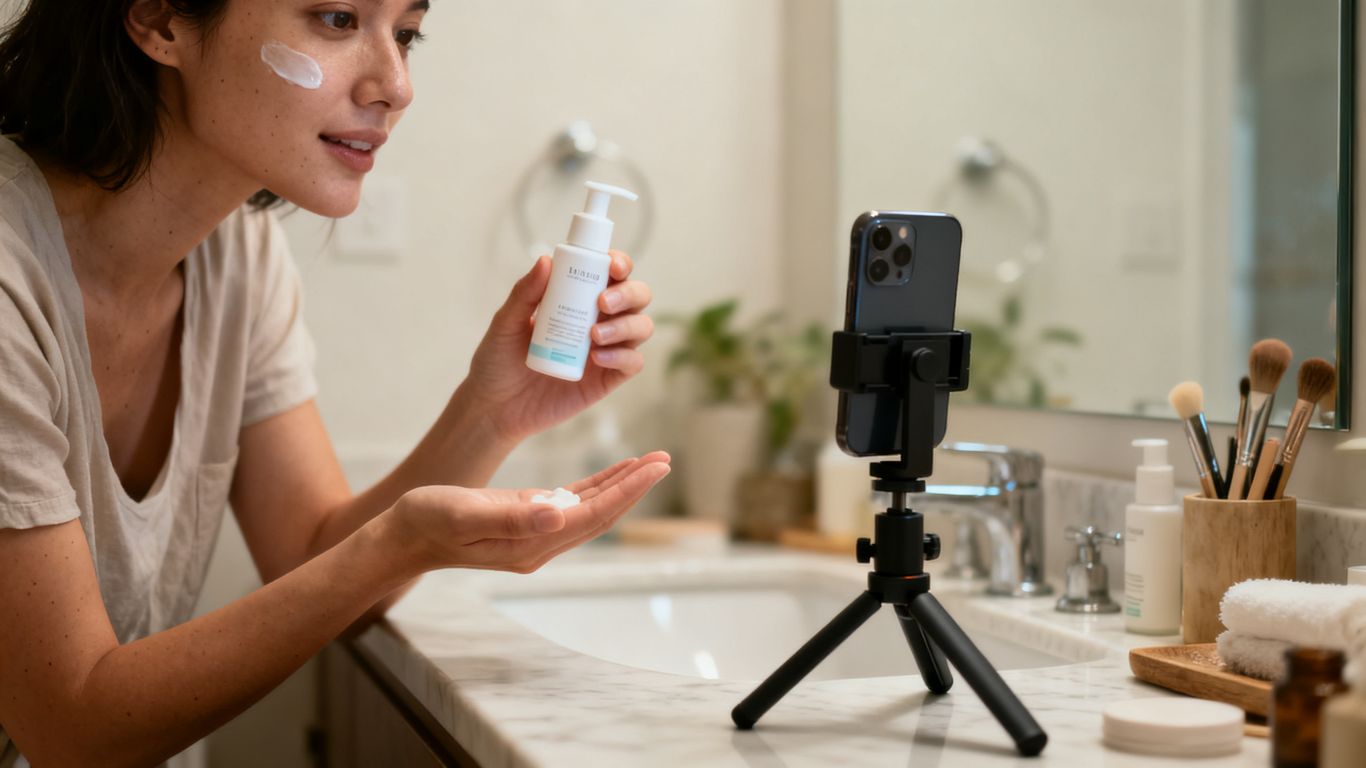
Creative is often the first part of the experience a shopper encounters, so it has to communicate quickly without asking the viewer to take every claim on faith. The strongest starting point is usually a real product use, an everyday problem, or a benefit that can be shown. Keep the message consistent with what the product page and offer can actually support. A useful in-app purchase journey perspective is to consider how the video hands off to the next step.
Lead with a clear product benefit or relatable problem
A viewer should be able to grasp the subject of the video early. Start with a recognizable need, a specific use, or a product benefit that matters to the intended shopper. The opening does not have to be loud; it does have to give people a reason to stay for the demonstration that follows.
Avoid stacking several benefits into a single opening. Choose one idea that can be explained clearly, then make sure the rest of the video supports it. If the central promise needs a long disclaimer or a string of qualifications, reconsider how it is presented and whether it belongs in the opening at all.
Show the product in use instead of relying on polished claims
A demonstration lets viewers observe relevant details for themselves. Show the product in a setting that makes sense, give the camera time to capture the important part, and avoid edits that make ordinary use difficult to understand. Specific, visible evidence tends to be more useful than broad praise.
This principle applies across very different product categories. Whether someone is considering a product featured in an ad or browsing the FILTRO.ro selection, clear information about what an item is for helps them judge whether it meets their needs. Let the details do the convincing rather than relying on claims the video cannot demonstrate.
Use creator-style storytelling, demonstrations, and social proof
Creator-style storytelling can make a product feel more grounded in everyday use. A creator might explain why they tried it, show a detail that surprised them, or answer a common question. The best approach depends on the person and the product, but the story should sound natural to the speaker and remain accurate.
Social proof can contribute context, but it should be presented honestly and not as a guarantee that every buyer will have the same experience. Be selective about what you include and keep the product itself visible. A useful creator video gives viewers both a human perspective and enough information to assess the item for themselves.
Test hooks, formats, and calls to action without changing everything at once
When a campaign underperforms, changing the video, offer, audience, and product page at the same time makes it harder to know what mattered. Test a small number of deliberate variations instead. For example, the team might keep the same product demonstration and compare different openings, then use what it learns to plan the next round.
A manageable test sequence can help preserve that learning:
- Compare two distinct opening hooks while keeping the core demonstration consistent.
- Try a different creator or delivery style only after reviewing the first result.
- Test a direct call to action against a softer invitation to explore details.
- Record the change and the result before deciding what to test next.
The purpose is not to test endlessly. It is to make each change interpretable, then carry the useful learning into the next creative version.
4. Align products, offers, and creators with the campaign
Even strong creative can struggle if the product is unavailable, the offer is hard to understand, or the creator is a poor fit for the audience. These operational details influence whether interest can turn into a satisfactory order. Decide what needs to be true about the product and offer before planning to scale. For a broader view of TikTok Shop profit margins, consider how product presentation and fulfillment costs affect the economics.
Select products with strong reviews, clear appeal, and reliable inventory
Products with clear uses are easier to demonstrate and easier for shoppers to evaluate. Reviews can help identify recurring questions or concerns, while inventory checks reduce the risk of promoting an item that cannot be supplied reliably. A product that looks appealing in a video still needs a listing that explains the details buyers care about.
Before putting paid distribution behind an item, review its availability, listing quality, and customer feedback together. Look for issues that the ad might amplify, such as inconsistent product details or unanswered questions. Sorting those out first protects the experience as well as the campaign budget.
Make pricing, discounts, and shipping expectations easy to understand
A shopper should not have to decode the offer. Show the relevant price and discount clearly, and make delivery expectations easy to find. If the offer has conditions, present them in a way that can be understood before the buyer reaches checkout.
This clarity matters because a strong opening can create interest that disappears as soon as the total cost or delivery details become uncertain. Review the ad and the product page side by side, then check that both communicate the same offer. That small step can surface a mismatch before it reaches a larger audience.
Match creator expertise and audience fit to the product
A creator’s fit is not only a question of audience size. Consider whether they can explain the product credibly, demonstrate it in a natural setting, and speak to the questions a prospective buyer might have. Familiarity with the category may help, but a good working relationship also depends on clear expectations about content and timing.
Creator fit is a judgment call, so use more than one signal when assessing it. A review of the creator’s past work, audience relevance, communication style, and proposed concept can help reveal whether the collaboration makes sense before a campaign begins.
Check affiliate commissions and margins before scaling creator-led ads
Creator-led activity needs to work for both the audience and the business. Before increasing spend, calculate what remains after product costs, commissions, discounts, shipping, and other relevant expenses. A campaign can produce attributed sales and still be a poor decision if each order leaves too little contribution to support sustainable growth.
For this reason, keep a concise pre-scale review. Blue Amber Digital lists affiliate strategies among its TikTok Shop management services, but each seller still needs to check that commissions and costs fit the specific product economics.
| Check | Why it matters |
|---|---|
| Commission rate | Establishes the creator cost per attributed sale |
| Discount and shipping | Clarifies the offer’s effect on order economics |
| Product and fulfillment costs | Shows what remains before overhead |
Treat the figures as a decision aid, not just a reporting detail. If the economics are tight, revise the offer or campaign plan before adding more paid distribution.
5. Structure campaigns for learning and efficient optimization
A campaign structure should make it possible to learn what is working without creating unnecessary complexity. Begin with a clear intended outcome, then decide how much separation the products or creative ideas genuinely need. Once a campaign is running, protect the value of its early data by avoiding major changes made in reaction to every small fluctuation. Planning horizons vary by business; BAT.TAXI’s 90-Day Plan is one example of a longer-term framework outside retail.

Set a campaign objective that matches the intended outcome
The objective should reflect what the campaign is expected to accomplish. A campaign designed to support purchases should not be judged only by attention, while a discovery effort may need a different reading of early results. Be explicit about the intended outcome before comparing formats or creative versions.
That clarity makes later decisions more useful. If the result misses expectations, you can ask whether the campaign reached the wrong people, the creative failed to communicate, or the product page did not answer key questions. Without a defined objective, the team may end up optimizing for a metric that does not serve the business goal.
Decide when to consolidate campaigns and when to separate products
Consolidation can make sense when products share an audience, offer, and purpose. Separate campaigns may be easier to interpret when items have different margins, distinct audiences, or very different creative needs. The right structure is the simplest one that still lets you make sound decisions from the results.
Too many small campaigns can fragment attention and make comparisons harder. On the other hand, combining unrelated products can obscure which item or offer is contributing to the outcome. Review the reasons for each division periodically instead of preserving a structure just because it was used at launch.
Give new campaigns room to learn before making major changes
Early performance can be uneven, particularly when the campaign has limited data. Set a reasonable review rhythm and decide in advance which issues would justify an immediate change, such as a broken product page or an inventory problem. Otherwise, avoid reacting to every short-term movement as though it identifies a lasting trend.
A learning period does not mean ignoring results. It means gathering enough information to make a change with a rationale, then noting what changed. If your advertising work eventually spans more channels, Kepla describes a multi-channel campaign management and reporting platform that may be relevant to that broader operational need.
Refresh fatigued creative and scale winners in measured steps
Repeated exposure can make a creative feel familiar, and performance may shift as audience response changes. Watch for signs that a video is no longer holding attention or bringing useful visits, then refresh the opening, demonstration, or creator approach. Keep the successful idea intact where possible instead of replacing every element at once.
Scaling is also a series of decisions rather than a single switch. Increase activity in steps, check whether the product remains available, and evaluate whether costs still fit the expected margin. A creative winner is worth extending only if the offer and operations can support the additional demand.
6. Measure performance beyond attributed sales
Attributed sales offer one view of performance, but they do not tell the whole story. Read the numbers alongside the costs of making and fulfilling each order, the timing of the purchase, and changes in other sales activity. The goal is not to collect more metrics for their own sake; it is to understand what drove the result and whether it can be repeated profitably. Broader examples of outcome-focused planning include online fundraising strategies, where activity also needs to be assessed against its intended result.
Track impressions, product views, clicks, and completed purchases
A sequence of metrics can help locate where shoppers lose interest. Impressions show whether the ad was served, product views indicate movement toward the listing, clicks show a further action, and completed purchases capture the final sale. No single number explains the entire journey, but together they can point toward a more useful question.
If the video gets attention but few people visit the product page, revisit the opening and call to action. If views turn into clicks but purchases remain low, examine the listing, offer, delivery expectations, and checkout experience. Read the sequence as a set of clues rather than assuming the last metric tells you which part failed.
Compare return on ad spend with contribution margin and total costs
Return on ad spend can help compare advertising revenue with media cost, but it does not automatically account for the full cost of an order. Include relevant expenses such as product costs, discounts, commissions, and fulfillment when judging whether a campaign contributes to the business. The precise calculation depends on how the seller defines its costs, so use a consistent method over time.
That distinction helps prevent a high attributed revenue figure from masking weak economics. A campaign can look strong in a narrow report and still need a different offer or a lower cost base to make sense. Pair the advertising view with a margin view before deciding to scale.
Read attribution windows and reporting alongside organic sales patterns
Attributed results depend in part on the reporting rules and time window used. Check those settings before comparing results across campaigns or periods. A purchase reported after an ad interaction can be useful evidence, but it does not always prove that paid distribution alone caused the sale.
Compare paid reporting with organic sales patterns and other activity during the same period. Look for timing or product changes that may explain a movement, and avoid treating attributed sales as a complete account of demand. This more careful reading makes it easier to distinguish a genuine improvement from a reporting effect.
Diagnose weak results by separating creative, offer, product, and fulfillment issues
When performance is weak, isolate the possible causes before deciding what to change. A clear diagnostic sequence might start with whether the creative earns attention, whether the offer is understandable, whether the product page supports a decision, and whether fulfillment meets the stated expectation. This helps keep the response specific instead of defaulting to a larger budget or a complete campaign rebuild.
For example, a product with healthy page visits but few purchases may need a closer review of price, details, or shipping information. A video that fails to attract relevant visits may need a new opening or a clearer demonstration. Fix the most plausible constraint, then check whether the next set of results supports that diagnosis.
Conclusion
TikTok Shop ads are most useful when the whole buying journey is planned together: content earns attention, product pages build confidence, offers make sense, and fulfillment meets expectations. Match campaign choices to the outcome you want, preserve learning through measured tests, and judge results against the costs that determine profit. For help coordinating store operations, affiliate strategy, and paid advertising, Blue Amber Digital provides TikTok Shop management services; consider discussing your goals with the team.
Frequently Asked Questions
What are TikTok Shop ads?
They are advertising formats connected to shopping experiences on TikTok, where viewers can discover products and move toward a product page or purchase. The specific journey depends on the format and the shop setup.
Which campaign type should a new seller try first?
Start with the campaign type that matches the product and the intended outcome. A product that needs a visual demonstration may call for video-led creative, while a live event requires a host, preparation, and a clear reason to tune in.
Do TikTok Shop ads guarantee a sale?
No. Advertising can create opportunities for discovery, but sales depend on many factors, including the product, creative, offer, listing, audience, and fulfillment experience.
How should a seller judge ad performance?
Review the full path from impressions and product views to clicks and purchases. Then compare attributed results with relevant costs and broader sales patterns before making a decision.
How often should ad creative be changed?
There is no single schedule that fits every campaign. Watch for signs that a creative has stopped attracting useful attention, and make focused changes that allow you to understand what improved or weakened performance.
Is a creator with a large audience always the best choice?
Not necessarily. Audience relevance, the creator’s ability to explain the product, and fit with the intended shoppers can matter as much as audience size.
What should a seller check before scaling a campaign?
Check that the product is available, the offer is clear, the product page answers likely questions, and the economics still work after relevant costs. Scale in measured steps and continue reviewing the customer experience.