Optimizing TikTok Shop conversion rate for Better Margins

Jaša Furlan
Founder & CEO

Key Takeaways
A healthy TikTok Shop business does more than turn attention into orders. It turns the right attention into orders that still leave room for fees, fulfillment, commissions, and returns.
- Measure conversion at each meaningful stage, from product view to completed order.
- Judge performance by contribution margin, not gross sales or views alone.
- Improve listings, content, LIVE sessions, and offers together rather than in isolation.
- Compare traffic sources by order quality, repeat potential, and total acquisition cost.
- Scale only after controlled tests show that added volume remains profitable.
Define the TikTok Shop conversion rate and margin targets
A TikTok Shop conversion rate is useful only when its denominator is clear. Views, product clicks, add-to-cart events, checkouts, and completed orders describe different stages of the buying journey. The goal is not to chase one impressive percentage, but to understand where commercial intent strengthens or fades.
Profit targets add the context that platform metrics miss. A product can sell quickly and still lose money if discounts, creator commissions, shipping, and returns consume the order value. Start with clean definitions, then build targets around the economics of each product and traffic source.
Calculate conversion rate across views, clicks, and orders
Use a separate rate for each step instead of calling every ratio a conversion rate. Product-view-to-order rate shows how well the overall offer converts, while click-to-order rate says more about shoppers who have already shown interest. The distinction matters when a video earns broad reach but attracts little purchase intent.
The TikTok Shop conversion guide is useful when setting these definitions because attribution windows and reporting delays can make platform numbers appear out of sync. Record the measurement window, source, and event definition beside every report so that week-to-week comparisons remain fair.
Separate gross revenue from contribution margin
Gross revenue is the amount collected from orders before the costs of making those orders possible. Contribution margin goes further: it subtracts product cost and the variable costs attached to selling, fulfilling, and acquiring the order. Margin is the decision metric when deciding whether to add budget, raise a commission, or extend a promotion.
A simple working formula is contribution margin per order = selling price minus product cost, platform fees, discounts, creator or affiliate commission, shipping subsidy, payment costs, expected return cost, and variable advertising cost. Keep fixed overhead separate at first; that makes campaign and product decisions easier to compare.
Account for fees, discounts, commissions, shipping, and returns
Build a per-order cost sheet before setting a target conversion rate. A discount may increase conversion while lowering the amount available to cover fulfillment. Likewise, a creator may produce inexpensive sales that carry a high return rate or require a commission that changes the economics of the bundle.
Review actual deductions rather than relying on the headline price. The profit margin framework is a helpful reference for organizing fees, pricing, catalog decisions, fulfillment, and creator-led sales into one operating view.
Set profit-based targets by product and traffic source
There is no universal good rate for every product. A low-priced item, a replenishable product, and a premium product can have very different acceptable acquisition costs and return patterns. Set a minimum contribution margin per order, then calculate the maximum allowable cost for each source.
| Traffic source | Primary conversion view | Margin question | Useful comparison |
|---|---|---|---|
| Organic video | Product view to order | Does reach attract buying intent? | Orders and returns by post |
| LIVE session | Session viewer to order | Does urgency improve profitable volume? | Units and margin by SKU |
| Creator affiliate | Attributed click to order | Does commission leave enough contribution? | Net margin by creator |
| Paid campaign | Click or product view to order | Can acquisition cost scale safely? | Incremental profit by campaign |
The table keeps one blended rate from hiding important differences. Use it as a starting point, then set product-level thresholds that reflect stock, seasonality, and customer quality.
Diagnose where shoppers drop out
A falling TikTok Shop conversion rate is a symptom, not a diagnosis. The cause may be weak traffic, an unclear listing, an unexpected landed cost, a variant problem, or a checkout issue. Treat the funnel as a sequence of decisions and inspect the transition between each one.
Look for patterns across enough time to avoid reacting to a single viral post or a short promotion. A useful conversion mistake checklist can help separate campaign-objective errors from product-page and audience issues.

Compare product views with add-to-cart and checkout events
Start with the simplest ratios: product views to add-to-cart, add-to-cart to checkout, and checkout to completed order. A large view count with weak add-to-cart activity often points to a mismatch between the content promise and the product page. Strong carts with weak completed orders suggest friction later in the journey.
Use absolute counts alongside percentages. A rate based on a small number of visitors can swing dramatically, while a modest rate across a large, consistent audience may represent the stronger commercial opportunity.
Identify friction in product pages, carts, and payment steps
Check whether the product page answers practical questions before asking for the order. Price, shipping timing, variant selection, sizing, product condition, and return expectations should be easy to find. Confusing options create hesitation even when the product itself is appealing.
Review the experience on a real mobile device, not only in a desktop dashboard. Reproduce the path from a video link to checkout and note slow-loading media, unavailable variants, unclear quantity controls, or costs that appear too late.
Segment performance by device, audience, creator, and campaign
Blended reporting can make a good segment look average and a weak segment look harmless. Break results down by device type, new versus returning shopper, creator, campaign, product, and time of day where volume allows. The goal is to find repeatable differences, not to create dozens of tiny segments with unreliable data.
Compare both conversion and contribution margin. A creator with fewer orders may be more valuable if their customers return fewer items and accept a lower discount.
Use analytics trends to distinguish traffic problems from offer problems
When views and clicks decline together, distribution or creative relevance may be the first issue. When clicks remain steady but carts fall, inspect the product promise, price, and listing. When carts are healthy but completed orders weaken, investigate checkout, shipping, inventory, and payment friction.
Track changes against a baseline that includes promotion status and inventory availability. This prevents a temporary stockout or discount ending from being misread as a creative failure.
Build product pages that convert without eroding profit
A product page should make the buying decision easier without promising more than the product can deliver. Clear positioning, useful evidence, and transparent terms reduce hesitation while protecting the price. The best listing is not necessarily the longest; it is the one that answers the objections most likely to stop this shopper.
Keep the commercial objective visible. A page that improves conversion by training customers to wait for deep discounts may damage future margin and perceived value.

Lead with a clear value proposition and specific product benefits
State what the product is, who it helps, and why the shopper should care within the first few lines. Specific benefits are stronger than broad superlatives: describe the use, result, material, size, compatibility, or routine it fits. Make the claim easy to verify through the rest of the listing.
Avoid forcing every possible keyword into the opening. Searchable language matters, but clarity should guide the shopper from discovery to consideration.
Use product images and videos to answer purchase objections
Visuals should resolve questions that text cannot handle quickly. Show scale, texture, setup, use, packaging, and the product in a realistic setting. If the shopper might wonder whether it fits, lasts, works with another item, or looks different in person, give that question a visual answer.
Use a sequence rather than a collection of similar images. Each frame should remove a different uncertainty, and the video should demonstrate the product in the context where the customer expects to use it.
Improve titles, descriptions, variants, and searchable product details
Put the product type and defining attributes where shoppers can scan them quickly. Keep variants distinct and understandable, especially when size, quantity, color, or formulation changes the price. Descriptions should support the purchase decision rather than repeat the title with extra adjectives.
Audit details after inventory or packaging changes. A mismatch between the listing and the item received can create returns, negative reviews, and margin loss even when the original conversion rate looked strong.
Present bundles, multipacks, and upsells with profitable pricing
Bundles work when they make the customer’s decision simpler or improve the value of a planned purchase. Calculate the margin of the complete offer, including added shipping weight, packaging, discounts, and any commission calculated on the order value. Do not assume that more units automatically create a better outcome.
Test a small number of meaningful options. For example, a single unit, a multipack, and a complementary add-on can reveal whether the obstacle is price, quantity, or uncertainty. Keep the comparison clear so shoppers can choose without doing mental arithmetic.
Improve TikTok content for higher-intent traffic
Reach is only the opening stage of commerce content. A video can attract millions of views from people who have no reason to buy, while a smaller, more specific audience may produce stronger orders and better margin. Build creative around the customer’s problem and buying context, not just the possibility of virality.
Content should also connect naturally to the product page. If the video demonstrates one use case and the listing presents another, the resulting click may be curious but poorly qualified.
Match hooks to customer needs instead of maximizing views alone
A hook should establish relevance quickly. Start with a recognizable problem, comparison, routine, or result that the intended shopper understands. Then make the next step clear enough that the viewer knows what they will learn or see if they continue.
Judge hooks by qualified actions as well as retention. Save rates, product clicks, add-to-cart activity, and completed orders reveal whether attention is moving toward commercial intent.
Demonstrate the product through authentic use cases
Show the product doing its job in a believable setting. Demonstrations should include the moments that matter to a buyer: preparation, handling, setup, result, limitations, or cleanup. Natural delivery often gives viewers more useful information than a polished but vague product pitch.
Use customer objections as a creative brief. Questions about durability, fit, ingredients, compatibility, or delivery can become clear video concepts rather than being left for the checkout stage.
Add clear calls to action and product links at the right moment
A call to action works best after the video has earned attention and supplied enough evidence. Tell viewers what to tap and why, using a reason connected to the content rather than a generic instruction. If the product link appears before the value is clear, the click may be weaker; if it appears too late, the opportunity may be missed.
Keep the destination consistent with the promise in the video. This is one place where a practical TikTok Shop growth strategy can connect discovery, product discoverability, LIVE selling, and campaign measurement without treating them as separate activities.
Repurpose winning organic videos across formats and audiences
Repurposing does not mean posting the same clip everywhere without adjustment. Preserve the central proof point, then change the opening, duration, framing, caption, or audience context. A video that works for existing followers may need more explanation when shown to unfamiliar shoppers.
Compare the adapted version with the original on qualified outcomes. If a shorter edit earns more views but fewer profitable orders, it is not automatically the better asset.
Optimize TikTok Shop LIVE selling
LIVE selling compresses demonstration, conversation, and purchase into one environment. That can make objections visible in real time, but it also makes weak preparation obvious. A profitable session needs a clear product sequence, a host who can explain value, and an offer that remains financially sound.
Treat each session as both a sales event and a learning opportunity. The questions viewers ask often reveal what product pages and short-form videos should explain next.
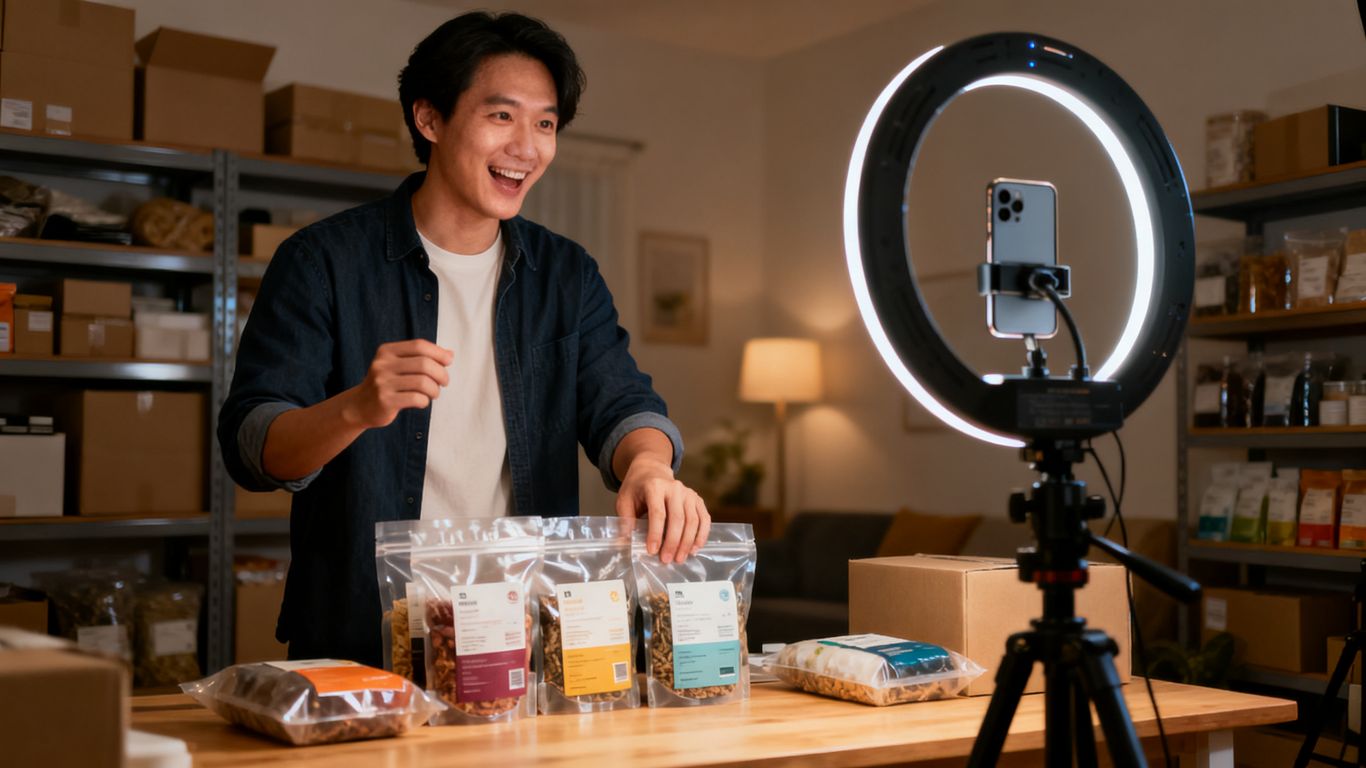
Structure live sessions around demonstrations, proof, and objections
Plan a repeatable rhythm: introduce the problem, demonstrate the product, explain evidence and limitations, answer objections, and give viewers a clear buying step. Rotate products deliberately rather than jumping between unrelated items. This helps the audience understand why each offer appears and gives the team cleaner product-level data.
Keep a short list of common questions visible to the host and moderator. Prepared answers improve consistency without making the session sound scripted.
Use limited-time offers without relying on excessive discounts
Urgency should clarify timing, not replace value. A session can use a limited quantity, a scheduled bundle, or a time-bound benefit, provided the terms are accurate and the resulting contribution margin is acceptable. Frequent deep discounts can make full-price demand harder to measure.
Set a floor before the session begins. The host should know which offers can be extended, which cannot be combined, and when a product should be removed rather than sold at a loss.
Train hosts to explain value, comparisons, shipping, and returns
Hosts need more than enthusiasm. They should be able to compare relevant options, describe the intended use, explain shipping expectations, and state return conditions in plain language. Accurate answers build trust and reduce the post-purchase surprises that lead to avoidable returns.
Use role-play for difficult questions and product limitations. A host who can acknowledge a poor fit for some shoppers may protect long-term economics better than one who pushes every viewer toward an order.
Track product-level performance during and after each LIVE session
Record viewers, product clicks, carts, orders, average order value, discount cost, commissions, cancellations, and returns by SKU. Review performance after the session as well as during it, because immediate sales can obscure later service costs or product-specific problems.
Compare sessions by product sequence and audience mix. A strong total session may still contain one product that absorbs attention while producing weak contribution margin.
Use creators, affiliates, and ads to protect margins
Creators can provide trust and context that a product listing cannot create by itself. They can also introduce costs and expectations that make a sale less profitable than it first appears. Evaluate partnerships on the quality of customers and orders, not simply on reach or attributed revenue.
The creator-led sales guide offers a useful way to think about audience fit, sales quality, discovery, and operational discipline together. Those factors belong in one decision, particularly when commissions and returns vary by partner.
Select partners based on conversion quality and profitable sales
Review a creator’s audience fit, product understanding, content consistency, and order history where available. A partner with a smaller audience may produce more relevant shoppers and fewer support issues. Ask whether the resulting sales remain profitable after commission, samples, discounts, shipping, and returns.
Use a trial period with defined products and guardrails. Expand the relationship when the creator produces repeatable net contribution rather than a single spike.
Give creators briefs that preserve authenticity and pricing discipline
A good brief supplies the facts creators need without forcing unnatural language. Include the main customer problem, approved product details, proof points, required disclosures, offer boundaries, and the correct product link. Leave room for the creator’s own delivery and audience knowledge.
Be explicit about claims and pricing. The goal is not to make every video identical; it is to keep the promise accurate and the commercial terms controlled.
Compare affiliate commissions with customer acquisition costs
Affiliate commission is one acquisition cost, not the complete cost of the partnership. Add samples, discounts, platform fees, shipping support, returns, and any paid amplification. Then compare the total with the contribution generated by the orders, not just the reported gross sales.
Use the same accounting logic for paid media and affiliates. This makes it easier to decide whether a creator deserves a higher commission, a different product, or no additional investment.
Retarget engaged shoppers with offers that support contribution margin
Retarget people who watched, clicked, added to cart, or engaged with a LIVE session according to their level of intent. Someone who visited a product page may need proof or a reminder, while someone who abandoned checkout may need reassurance about shipping or variants rather than a larger discount.
Set frequency and offer limits. Retargeting should recover viable demand, not teach every shopper to delay purchase until the most expensive incentive appears.
Test and scale a more profitable conversion funnel
Optimization is a sequence of decisions, not a permanent search for a higher dashboard number. Choose tests that can change either conversion, order value, variable cost, or return rate. Keep the question narrow enough that the result can guide the next action.
Blue Amber Digital is a full-service Amazon and TikTok Shop agency, and its data-driven positioning fits this kind of cross-channel measurement: the same product should be judged by sustainable commercial performance rather than isolated platform attention. A broader TikTok Shop scaling framework can help teams connect content, offers, creators, paid media, and customer experience as volume grows.
Prioritize tests for pricing, bundles, creative, and product-page elements
Start with a hypothesis tied to a visible constraint. If shoppers click but do not add to cart, test the offer or page presentation. If carts are strong but margin is weak, test bundle economics, discount depth, or the traffic mix before changing the creative.
A practical testing queue might include:
- Product-page opening image and first benefit statement.
- Single-unit pricing versus a clearly priced multipack.
- Demonstration-led creative versus problem-led creative.
- Shipping explanation and variant presentation.
After each test, document what changed and which customer segment saw it. This prevents a string of unconnected edits from making the account impossible to learn from.
Measure incremental profit instead of conversion rate alone
A winning test should improve the economics of additional demand, not only the percentage of visitors who order. Track contribution profit, average order value, discount cost, acquisition cost, cancellations, and returns beside conversion. A higher rate can be unfavorable if it comes from a discount that removes more margin than it creates.
Use profit per visitor when traffic volume differs meaningfully between variants. This connects the quality of the offer to the value of the attention it receives.
Apply controlled experiments to avoid misleading short-term results
Change one major variable at a time when possible, keep the comparison period long enough to include normal buying patterns, and avoid ending a test because of a single strong day. Note promotions, stock changes, creator activity, and campaign edits that could contaminate the result.
If a clean split is not possible, use a consistent baseline and treat the conclusion as directional. Confidence improves when the same pattern appears across multiple products or periods.
Scale winning campaigns while monitoring returns and customer quality
Increase volume in stages and watch whether marginal performance holds. The first layer of spend may reach the easiest buyers; additional spend can bring higher acquisition costs, lower order value, or more returns. Set stop rules before scaling so enthusiasm does not replace financial discipline.
When the numbers support expansion, book a strategy call with Blue Amber Digital to discuss a more structured approach. Keep reviewing contribution margin, fulfillment reliability, customer quality, and repeat purchase potential as the account grows.
Conclusion
A profitable TikTok Shop conversion rate is the result of aligned economics, clear product pages, relevant content, disciplined LIVE selling, and careful partner selection. Measure each stage, test one meaningful change at a time, and scale only when added demand continues to produce healthy contribution margin.
Frequently Asked Questions
What is a good TikTok Shop conversion rate?
A good rate depends on product category, price, audience intent, traffic source, and margin structure. Compare performance with your own historical baseline and judge it alongside contribution profit, not as an isolated benchmark.
How is TikTok Shop conversion rate calculated?
Divide the number of completed orders by the defined starting event, such as product views or clicks, then multiply by 100. Always label the denominator and measurement period so different funnel stages are not compared as if they were the same metric.
Why can sales increase while profit decreases?
Sales can rise because of deeper discounts, higher commissions, shipping subsidies, or acquisition costs. If those variable costs grow faster than order contribution, gross revenue will increase while profit falls.
Should I optimize for views or orders?
Optimize for the business outcome appropriate to the funnel stage, but treat completed orders and contribution margin as the final commercial checks. Views are valuable when they bring qualified shoppers; they are not sufficient evidence of profitable demand.
How can I find where shoppers abandon the funnel?
Compare product views, clicks, add-to-cart events, checkouts, completed orders, cancellations, and returns. Segment those figures by product, device, creator, campaign, and audience to identify where the largest meaningful drop occurs.
Do bundles always improve TikTok Shop profitability?
No. Bundles can raise order value, but extra units may add packaging, shipping, discount, commission, or return costs. Price the complete offer from its contribution margin rather than assuming a larger basket is automatically better.
How often should TikTok Shop tests be reviewed?
Review early signals regularly for problems such as broken links or stockouts, but wait for enough stable volume before making a final decision. Account for promotions, seasonality, creator activity, and returns before declaring a winner.