Amazon FBA Prep: Your Essential Guide for Seamless Fulfillment

Jaša Furlan
Founder & CEO
So, you’re looking to get your products into Amazon’s massive fulfillment network? That’s great! But before you start dreaming of Prime badges and speedy deliveries, there’s a bit of homework to do. Getting your items ready for Amazon’s warehouses, what they call amazon fba prep, is super important. Mess this up, and you could be looking at extra fees, inventory stuck in limbo, or worse. It’s not just about throwing things in a box; there are rules. This guide will walk you through what you need to know so your products can get to Amazon without any hitches.
Key Takeaways
Proper amazon fba prep is needed to avoid extra costs and delays when sending items to Amazon.
Understand Amazon’s rules for barcodes and labels, like the FNSKU, to make sure each item is tracked right.
Packaging matters; use poly bags or shrink wrap when needed and always include suffocation warnings for certain items.
If you’re selling items together as a bundle or set, make sure they’re packaged and labeled as one unit.
Sending case-packed items? Keep the number of items in each case the same for a specific product.
The Crucial Role of Amazon FBA Prep

You’ve got a great product, you’ve sourced it, and you’re ready to let Amazon handle the heavy lifting with Fulfillment by Amazon (FBA). But before your goodies can start their journey to eager customers, there’s a step that many sellers, especially newcomers, tend to gloss over: FBA prep. Think of it as the backstage crew for your product’s big show. Get it wrong, and the whole performance can fall apart.
Why FBA Prep Isn’t Just a Suggestion
Amazon runs a massive operation. Millions of items flow through their warehouses daily. To keep that giant machine humming, they have rules. Lots of them. These aren’t suggestions; they’re mandates. Failing to prep your products according to these guidelines isn’t just an inconvenience; it can lead to some seriously unpleasant outcomes. We’re talking about extra fees that eat into your profits, inventory getting stuck in limbo, or worse, Amazon outright rejecting your shipment. It’s like showing up to a black-tie event in flip-flops – you just won’t get in.
The Ripple Effect of Improper Preparation
It’s not just about avoiding Amazon’s wrath, though. How you prep your items directly impacts your customer’s experience. Imagine a customer excitedly unboxing your product, only to find it damaged because it wasn’t packaged correctly, or worse, they receive the wrong item because it wasn’t labeled properly. That’s a fast track to a negative review, a lost sale, and a dent in your seller reputation. Remember, Amazon’s goal is quick, accurate delivery. If your prep work hinders that, everyone suffers.
Proper FBA preparation is the bridge between your product’s potential and its successful delivery to the customer. Skipping this step is like building a beautiful house and forgetting to install the doors.
Setting the Stage for Seamless Fulfillment
Getting FBA prep right from the start means your products can move smoothly through Amazon’s system. This translates to:
Faster Processing: Your inventory gets checked in and available for sale quicker.
Reduced Fees: Avoiding Amazon’s surprise charges for improper prep saves you money.
Happier Customers: Products arrive in good condition, leading to better reviews and repeat business.
Better Seller Metrics: Staying compliant helps maintain a healthy seller account.
Basically, good prep work is the foundation for a successful FBA business. It’s not the most glamorous part of selling online, but trust me, it’s the part that keeps the whole operation from going sideways. Let’s get into the nitty-gritty of how to do it right.
Decoding Amazon’s Barcode and Labeling Mandates
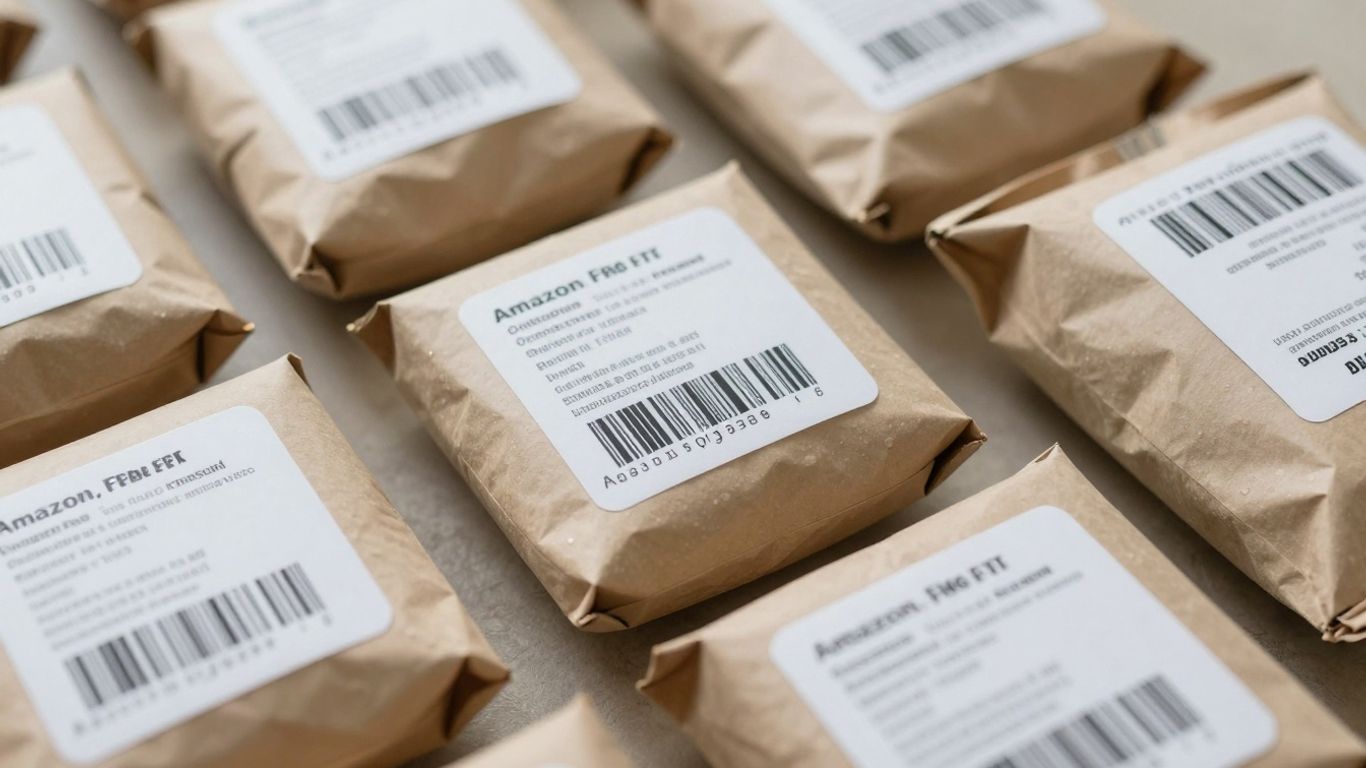
Alright, let’s talk about the nitty-gritty: barcodes and labels. This isn’t just about slapping a sticker on something and calling it a day. Amazon’s got rules, and frankly, they’re pretty particular. Get this wrong, and your products might end up in Amazon’s version of time-out, which means delays, extra fees, or worse, getting sent back home.
The FNSKU: Your Product’s Unique Amazon Passport
Think of the FNSKU (Fulfillment Network Stock Keeping Unit) as your product’s personal ID card for Amazon’s warehouse. It’s how they know exactly what’s what when your inventory arrives. Unlike a standard UPC or EAN, the FNSKU is specific to your listing on Amazon. This means if you’re selling the same widget as ten other sellers, your FNSKUs will be different. This unique identifier is non-negotiable for most FBA sellers. It prevents confusion and ensures that when a customer buys from you, they get your specific item, not a competitor’s.
Here’s what you absolutely need on that label:
The FNSKU itself (starts with ‘X’)
The product’s name (keep it clear and concise)
The product’s condition (usually ‘new’)
Messing this up, like using the wrong FNSKU or forgetting the condition, can lead to your items being rejected or incurring extra charges. It’s like showing up to a party with the wrong invitation – not a good look.
When ‘Sold as Set’ Means Exactly That
So, you’ve got a killer bundle – maybe a shampoo and conditioner combo, or a set of artisanal soaps. Amazon needs to know this is a single unit, not individual items to be separated. For these ‘sold as set’ items, you need a clear label that says, “Sold as set, do not separate.” This little sticker is your best friend in keeping your bundles intact. Without it, Amazon warehouse workers might, and have, separated your perfectly curated set, leading to unhappy customers and potential returns. It’s a small detail, but it makes a big difference in maintaining the integrity of your bundled offers.
Navigating Barcode Requirements Like a Pro
Beyond the FNSKU, there are general barcode rules. Every scannable barcode needs to be on a flat surface, not covering seams or closures. Think of it like trying to read a book with the cover bent – it’s just harder. If you’re using manufacturer barcodes (like UPCs), make sure they’re not obscured by anything. Amazon’s scanners are pretty smart, but they’re not magic. They need a clear shot at that barcode. For items that are sold individually but come in a case pack, you’ll need to label each individual item with its own FNSKU. This is different from case-packed items, which we’ll get to later. It’s all about making sure Amazon can scan and track every single unit that comes through their doors. For the latest on Amazon’s 2026 FBA prep compliance standards, it’s always a good idea to stay updated, as these rules can evolve.
Packaging Perfection: Beyond the Basic Box
Poly Bags and Shrink Wrap: More Than Just Pretty
Look, nobody wants their new widget arriving looking like it went a few rounds with a badger. That’s where packaging comes in. It’s not just about making things look nice; it’s about keeping them safe. For smaller items, especially those made of cloth, plush toys, or baby gear (for the little ones under three, mind you), a good poly bag or some shrink wrap is your best friend. These aren’t just for show; they keep things clean and protected. Just remember, if your poly bag’s opening is five inches or wider, you absolutely must slap a suffocation warning on it. Amazon’s pretty serious about that.
Suffocation Warnings: A Small Detail, Big Importance
Speaking of suffocation warnings, let’s not gloss over this. It’s a tiny detail, but it carries a lot of weight. If you’re bagging up items and the opening is five inches or more, that warning needs to be there. It’s a safety thing, and Amazon doesn’t mess around with safety. Failing to include it can lead to your inventory getting rejected. So, double-check those bag sizes and make sure the warning is clearly visible. It’s a simple step that prevents a whole lot of headaches.
Protecting Your Precious Cargo
So, what happens when your product is a bit more… delicate? Think glass, or anything that might shatter if you look at it funny. Amazon expects these items to survive a bit of a tumble. We’re talking about a drop test from three feet, five times. That means wrapping fragile items individually, often with bubble wrap. If you’re selling a set of glasses, each glass needs its own protection. It’s about making sure your product arrives in one piece, not in a million tiny shards. This attention to detail is what separates a good seller from one who’s constantly dealing with returns and unhappy customers. It’s also why understanding how to properly package items, like using appropriate boxes that fit snugly, is so important. You don’t want your items rattling around like dice in a cup during transit. For those selling items that might be considered marketing materials, remember Amazon’s rules: no flyers or extra promo stuff tucked inside. Stick to the product itself. If you’re looking for ways to streamline this process, exploring options like Amazon KDP ads might be a good idea for your book sales, but for physical products, the prep is key.
Mastering the Art of Bundling and Kitting
When Two (or More) Are Better Than One
Sometimes, selling products individually just doesn’t cut it. That’s where bundling and kitting come in. Think of it as giving your customers a curated experience, a complete solution, or just a really good deal. Bundling is essentially grouping two or more distinct products together to be sold as a single unit. Kitting is similar, but often implies that the items are assembled or packaged together in a specific way. It’s a smart way to move more inventory, increase your average order value, and even differentiate yourself from competitors who are only selling individual items. Plus, who doesn’t love a good value pack?
Ensuring Your Bundles Stay Bundled
Amazon wants to know that when a customer orders your “Super Spa Set,” they actually get the whole set, not just half of it. This means your bundled items need to be securely packaged together so they don’t get separated before they reach the customer. Amazon requires that bundled products be clearly marked as “Sold as set, do not separate.” This is usually done with a sticker. It’s a small detail, but it’s super important for keeping your inventory organized and your customers happy. If Amazon receives a bundle that’s falling apart, they might break it down, which can cause all sorts of headaches for you and your inventory.
Here’s a quick rundown on keeping your bundles intact:
Secure Packaging: Use shrink wrap, tape, or a poly bag to keep all items in the bundle firmly together. Make sure it’s not so tight that it damages the products, but secure enough that they won’t shift.
Clear Labeling: Apply the “Sold as set, do not separate” sticker prominently on the outside of the bundle. This is Amazon’s signal that this is one unit.
Unique Barcode: Each bundle needs its own FNSKU or UPC barcode. This barcode represents the entire bundle as a single sellable item, not the individual products within it. You can’t just slap individual product barcodes on a bundle and expect it to work.
Compliance for Multi-Packs
Multi-packs are a specific type of bundle where you’re selling multiple identical items together. Think a 12-pack of soda cans or a 4-pack of AA batteries. The rules are pretty similar to general bundling, but with a few extra points to consider. The key is that Amazon needs to be able to scan a single barcode to identify the entire multi-pack as one sellable unit.
Single Barcode: The multi-pack must have one scannable barcode (FNSKU or UPC) that represents the total quantity. For example, if you’re selling a 10-pack of socks, the barcode should represent “10 socks,” not just “1 sock.”
Clear Quantity Indication: Make sure the packaging clearly states the quantity of items included. This helps both Amazon associates and customers understand what they’re getting.
No Separation: Just like with other bundles, multi-packs should be packaged so that the individual items cannot be easily separated. This might mean shrink-wrapping the entire pack or placing it in a sturdy box.
Creating successful bundles can really boost your sales on Amazon. It’s all about presenting your products in a way that makes sense to customers and is easy for Amazon to process. Get it right, and you’ll see the benefits.
When you’re creating bundles or multi-packs, always double-check Amazon’s specific guidelines for packaging and labeling. What works for one type of product might not work for another, and Amazon’s rules can change. Staying updated is key to avoiding costly mistakes.
Case-Packed Products: Consistency is Key
Alright, let’s talk about case-packed products. This is where Amazon wants things to be neat and tidy, like a perfectly organized pantry. When you’re sending in multiple units of the same item all bundled up in a larger box (that’s a case, by the way), Amazon has some pretty specific ideas about how it should all go down. The main thing to remember here is uniformity. Think of it like a troop of soldiers – they all need to be the same height, same uniform, same everything. If you send in a case with 12 units of Product A one day, and then another case with 24 units of Product A the next day, you’re going to cause some headaches at the fulfillment center. They have systems that expect things to be predictable.
The Uniformity Imperative
So, what does this uniformity actually mean? It means that for a specific product (SKU), every single case you send in must contain the exact same number of units. No exceptions. If your Product X comes in a case of 24, then all cases of Product X must have 24 units. You can’t mix and match within the same SKU. This isn’t just about making Amazon’s life easier; it’s about making sure your inventory gets counted correctly and quickly. Imagine trying to count a pile of mixed-up socks – it’s a mess. Amazon’s receiving process is similar, and consistency is the secret sauce to keeping it running smoothly. It also helps when you’re trying to figure out your own inventory levels and plan for future stock.
What Happens When Cases Aren’t Consistent?
If you mess this up, well, things can get a bit sticky. Amazon might refuse the shipment altogether, meaning it gets sent back to you, costing you time and money. Or, they might decide to re-case your items themselves, and guess what? They’ll charge you for it. And not a small fee, either. It can really eat into your profit margins. Plus, it can lead to delays in your inventory becoming available for sale, which is the last thing any seller wants. It’s like showing up to a potluck with a dish that’s missing half the ingredients – nobody’s happy.
Delayed Inventory: Your products might sit in a receiving queue longer than usual.
Unexpected Fees: Amazon will charge you for their time and effort to fix your mistake.
Inventory Rejection: In worst-case scenarios, your entire shipment could be sent back.
Inaccurate Stock Counts: This can lead to overselling or underselling.
The goal is to make it as easy as possible for Amazon’s warehouse staff to process your inventory. When they can scan a case and know exactly what’s inside and how many units there are, everything moves faster. This predictability is what Amazon thrives on, and it’s your job as a seller to provide it.
Remember, Amazon has limits on how many units can be in a single case, too – usually 150. Always double-check the latest guidelines on their seller portal. Sticking to these rules for case-packed items is a simple way to avoid a whole lot of trouble and keep your products moving towards happy customers. For more details on how to keep your inventory organized and compliant, tools like Jungle Scout can be a lifesaver.
Leveraging Technology for FBA Prep Prowess
Look, nobody enjoys doing the same tedious task over and over. It’s like watching paint dry, but with more tiny barcodes. Thankfully, we live in the future, and technology is here to save us from the FBA prep monotony. Think of it as your secret weapon against errors and wasted time. Instead of manually checking every single item, you can let some smart software do the heavy lifting. This isn’t just about making things easier; it’s about making them right.
Automation: Your Secret Weapon Against Errors
Let’s be honest, when you’re prepping hundreds, maybe thousands, of items, mistakes happen. You might slap the wrong label on, miss a suffocation warning, or just get plain tired and zone out. Automation steps in to prevent this. Automated systems can scan products, print and apply labels with pinpoint accuracy, and even perform basic quality checks. This drastically cuts down on the human error factor that can lead to rejected shipments or unhappy customers.
Software Solutions for Smarter Prep
There’s a whole ecosystem of software out there designed to make your FBA prep life simpler. Inventory management systems, for example, keep a real-time track of what you have, what’s been prepped, and what’s ready to ship. Label printing software ensures your barcodes are always up to Amazon’s standards, saving you from those dreaded “non-compliant” notices. Some advanced solutions can even help you plan your shipments more effectively, predicting when you’ll need to restock and how much.
How Tech Boosts Accuracy and Efficiency
Using technology isn’t just about speed; it’s about getting things done correctly the first time. Automated checks mean fewer items get sent back or flagged by Amazon. Digital tracking means you always know where your inventory is and what stage of prep it’s in. This kind of organized approach means your products get to Amazon’s warehouses faster and are ready to sell sooner. It’s a win-win: Amazon likes it, and more importantly, your customers get their orders quicker.
The goal here is to move away from manual processes that are prone to human error and costly mistakes. Technology offers a way to standardize your prep work, making it more reliable and predictable. This frees up your time and resources to focus on other parts of your business, like marketing or product development, instead of getting bogged down in the nitty-gritty of packaging and labeling.
Here’s a quick look at how different tech tools can help:
Inventory Management Software: Tracks stock levels, alerts you when to reorder, and helps manage your FBA shipments.
Barcode Labeling Software: Generates compliant FNSKU or UPC labels, ensuring they scan correctly every time.
Automated Packaging Machines: For higher volume sellers, these can speed up bagging and sealing processes.
Shipping Software Integrations: Connects your prep process directly to your shipping plan, reducing data entry.
Basically, if you’re still doing everything by hand, you’re probably working harder than you need to. Investing in the right tech can make a surprisingly big difference in how smoothly your FBA business runs.
Navigating the Nuances of Shipping to Amazon
Alright, so you’ve got your products prepped, labeled, and looking sharp. Now comes the part where you actually send them off to Amazon’s warehouses. This isn’t exactly like mailing a birthday card to your aunt Mildred; there are a few more hoops to jump through. Getting this part right means your products land smoothly and start selling, while messing it up can lead to delays, extra fees, or even your inventory getting rejected. Let’s break down what you need to know.
Documentation That Doesn’t Play Games
Before your shipment even thinks about leaving your sight, you need the right paperwork. Think of these as your product’s passport. Amazon needs to know who you are, who they are, and what exactly is in the box. The main players here are the Commercial Invoice and the Packing List.
Commercial Invoice: This is the big one. It needs your info, the buyer’s (Amazon’s) info, the agreed-upon shipping terms (usually DDP, meaning you cover all costs and duties), a clear description of each item, its quantity, its value, and the HS code for every product. Getting the HS code right is super important; misclassifying something can cause headaches later.
Packing List: This is a bit simpler, detailing what’s in the shipment and how it’s packed. It’s like a manifest for your goods.
Don’t wing it with your documentation. Double-checking every detail, especially those HS codes and Incoterms, can save you a mountain of trouble down the road. It’s better to spend a few extra minutes now than deal with customs holding your precious inventory.
Understanding Additional Product Requirements
Some items aren’t as straightforward as a t-shirt or a coffee mug. Depending on what you’re selling, Amazon might have extra demands. For instance:
Wood Products: If your item is made of wood, you might need a heat treatment certification. Yep, even for a wooden picture frame.
Plant-Based Items: Think seeds, dried flowers, or anything that grew. These often require a phyto certificate.
Certain Metals: Some steel and aluminum products might need a Certificate of Origin.
It’s your job to figure out if your product falls into any of these special categories. Amazon isn’t going to chase you down for this information; you need to be proactive. Checking the Helium 10 Chrome Extension can sometimes give you insights into competitor products and their potential requirements, though it’s always best to check official sources too.
Customs Charges: Avoiding Unpleasant Surprises
This is where things can get a bit spicy, especially if you’re shipping internationally. When you agree to DDP (Delivered Duty Paid), you’re on the hook for all the import duties and taxes in the destination country. These aren’t small change, and they can add up fast.
Here’s a rough idea of what you might encounter for shipments to the US:
Fee Type | Estimated Cost |
|---|---|
Import Declaration | $175.00 |
Import Duty | Varies (cost + 3% disbursement fee) |
Merchandise Processing | 0.3464% of goods value (min $29.66, max $575.35) |
Temporary Bond Fee | $6.50 per $1000 value (min $75.00) |
HMF Fee | 0.125% of goods value |
For the UK, the fees look a bit different, with charges for Import Declaration and Customs Administration.
Always research the specific duty rates and import restrictions for your product and destination country before you ship. Ignoring these costs is a surefire way to eat into your profits or even lose money. It’s a bit like trying to assemble furniture without reading the instructions – you’ll probably end up with something wobbly and expensive.
Shipping to Amazon can feel like a puzzle with all its rules and steps. Understanding how to get your products there smoothly is key to success. Don’t let shipping worries slow you down! Visit our website to learn how we make sending your items to Amazon simple and stress-free.
So, What’s the Takeaway?
Alright, we’ve covered a lot of ground on getting your products ready for Amazon’s warehouses. It might seem like a lot of rules and details, and honestly, sometimes it feels like Amazon just loves making things complicated. But remember, getting this prep stuff right isn’t just about avoiding angry emails from Amazon or extra fees – though those are pretty good reasons. It’s about making sure your customers get their stuff on time and in one piece, which, let’s be real, is how you actually make money. So, take a deep breath, follow the steps, and maybe even consider getting some help if it all feels like too much. Your future, less-stressed self will thank you.
Frequently Asked Questions
What exactly is FBA prep?
FBA prep is like getting your products ready for a big trip to Amazon’s warehouse. It means making sure everything is labeled right, packed safely, and follows all of Amazon’s rules so they can store it and ship it out quickly to customers.
Why is FBA prep so important?
If you don’t prep your items correctly, Amazon might charge you extra fees, your products could get stuck, or worse, they might even send them back! Doing it right means your products get to customers fast and happy, and you avoid headaches and extra costs.
What’s an FNSKU label?
Think of an FNSKU label as your product’s special ID tag for Amazon. It’s a barcode that Amazon uses to know exactly which product belongs to you and where it is in their warehouse. Every single item you send to Amazon needs one.
Do I need special packaging for some items?
Yes, sometimes! For things like clothes or stuffed animals, you might need to put them in a plastic bag (a poly bag) that has a warning about not letting kids suffocate. This is to keep them clean and safe. Amazon has rules about this.
What if I want to sell items together as a bundle?
If you’re selling a few items together as one package, you need to make sure they are securely bundled and clearly marked as a set. Amazon needs to know it’s one item, not separate pieces. You usually put a sticker on it that says ‘Sold as Set’.
Can technology help with FBA prep?
Absolutely! Using special software can help you keep track of your products, print the right labels automatically, and make sure everything is done correctly. It’s like having a super-smart helper that reduces mistakes and saves you time.